
Quick answer: Both are correct for puja. Tradition holds pure cow ghee as the most auspicious choice, so many families light a ghee diya for the main daily puja and for occasions like Lakshmi Puja. Sesame (til) or mustard oil is the everyday workhorse: cheaper, longer-burning, and the usual choice for akhand jyot, Shani or Hanuman worship, and the rows of diyas lit outdoors at Diwali. If you light one lamp a day indoors, a ghee diya is the cleaner, simpler choice; if you need many lamps or a lamp that burns for hours, oil makes more sense.
Every Indian home has its own diya habit. One grandmother insists on desi ghee for the morning lamp; another fills a brass deepam with sesame oil every evening without a second thought. Neither is wrong. The question of ghee versus oil isn’t really about which is "allowed" — both have been part of Hindu worship for centuries — but about which one fits the puja you’re doing, the space you’re lighting it in, and how much time you have each day.
Here is a practical comparison, followed by what tradition says and how to choose.
What tradition says about ghee and oil
Puja texts and family custom are commonly cited as recommending only ghee or oil in a puja lamp, rather than any other fuel. Within that, cow ghee is widely regarded as the most sattvic (pure) offering, because the cow and its products hold a sacred place in Hindu practice. That is why ghee is so often reserved for the most important lamp of the day or the most important puja of the year.
Oil has its own place, not a lesser one. Sesame oil in particular is traditionally associated with Shani Dev and offered on Saturdays, and mustard oil lamps are common in Hanuman worship and in many North Indian households’ evening lamp. Some families also follow the custom of placing a ghee lamp on the right side of the deity and an oil lamp on the left — though, as with most of these practices, customs differ from region to region and home to home.
The short version: these are beliefs and family traditions, not rules everyone shares. If your household has a practice, follow it.
Shop the essentials

Ghee diya vs oil diya: side-by-side
|
|
Ghee diya |
Oil diya (sesame / mustard) |
|
Flame |
Steady, golden, low flicker |
Brighter or more flickery, depending on oil and wick |
|
Soot & smoke |
Usually less soot when the ghee is pure |
Varies: sesame is fairly clean, mustard can be smokier |
|
Smell |
Mild, warm, buttery |
Sesame is near-neutral; mustard is sharp and pungent |
|
Burn time |
Shorter per spoonful; best for the puja itself |
Often longer; suited to akhand jyot and evening lamps |
|
Cost per day |
Higher |
Lower |
|
Mess |
Solidifies when cool, so less spilling |
Liquid; can stain brass and cloth |
|
Traditionally used for |
Daily puja, Lakshmi puja, meditation |
Daily lamps, Shani and Hanuman worship, Diwali rows of diyas |
When a ghee diya makes more sense
• Your main daily puja. One small ghee lamp in the mandir, lit morning or evening, is the most common way families use ghee every day.
• Lakshmi Puja and special vrats. Many households keep oil for routine lamps and switch to ghee for festival pujas, which makes those days feel distinct.
• Small flats and closed rooms. Pure ghee generally produces less soot than many oils, so walls, ceilings and brass stay cleaner over time.
• Busy mornings. Pre-filled ghee diyas need no pouring, no wick-trimming and no spilled oil, which is why they have become popular for daily use.
When an oil diya makes more sense
• Akhand jyot. A lamp meant to burn continuously through Navratri or another vrat is usually fed with oil, because it is affordable to keep topping up.
• Many lamps at once. Lighting dozens of diyas on balconies and doorsteps at Diwali is far more practical with oil.
• Specific deities and days. Sesame oil on Saturdays and mustard oil in Hanuman worship are long-standing customs in many families.
• Outdoors. Wind and open air make soot and smell less of a concern, and oil lamps burn longer.
Which oil is best if you choose oil?
Sesame (til) oil is the most common puja oil across South and West India: mild-smelling and relatively clean-burning. Mustard oil is widely used in the North and East and gives a bright flame, though its smell is strong and it can be smokier. Ready-made panch deepam oil blends several oils together. Many households avoid refined cooking oils like sunflower for puja lamps, preferring traditional cold-pressed oils.
Whatever you use, buy it pure and keep it separate from your kitchen stock, so the lamp oil is never contaminated with food.
Tips for lighting either kind safely
• Use a cotton wick of the right length: a long wick gives a tall, smoky flame. Trim it so the flame stays small and steady.
• Place the diya on a brass plate or tile, away from curtains, garlands and paper.
• Never leave a lamp burning unattended near children or pets, and keep a lid or snuffer nearby for an akhand jyot.
• Clean brass diyas after use while the residue is still soft; ghee wipes away easily once warm.
• Open a window during and after puja, especially if you also light dhoop. On high-pollution days, see our low-smoke puja guide for poor-AQI days.
Building a complete daily puja setup
The diya is the anchor of the daily puja, but it rarely stands alone. A simple, complete routine looks like this:
• Light: PureJyot Pure Cow Ghee Diya (100 pcs) — pre-filled, wax-free ghee diyas for one-lamp-a-day households.
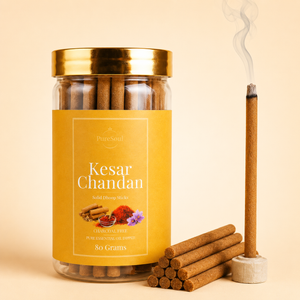
• Fragrance: a charcoal-free dhoop such as Kesar Chandan Dhoop Sticks. Not sure which fragrance to start with? Our Pure Soul fragrance guide walks through all nine.
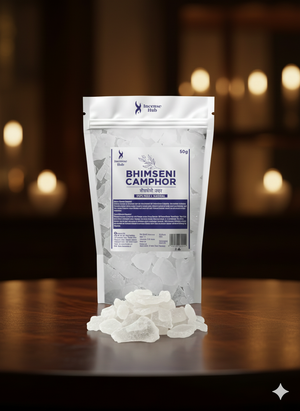
• Aarti: Bhimseni camphor for the closing aarti.
If you are setting up a new puja corner, our guide to vastu tips for where and when to light incense covers direction and placement.
The bottom line
There is no single right answer to ghee versus oil. Ghee is the traditional choice for the most important lamp, and it is the cleaner, simpler option for one lamp a day indoors. Oil is the practical choice when you need many lamps, a lamp that burns all night, or a lamp tied to a specific deity’s custom. Many homes use both, and that is exactly how the tradition has always worked: the flame matters more than the fuel.
Shop the essentials