
Walk into any puja samagri shop and you'll find a small, slightly baffling shelf next to the incense sticks: little packets labelled loban, gugal, black mora, and stacks of pre-formed cups called sambrani. Unlike agarbatti or dhoop sticks, these are resins — raw or lightly processed tree gum that release fragrance when they're heated rather than simply lit end-to-end. They're older than the incense stick itself, and in many Indian homes they're still the first choice for aarti, havan, and small everyday rituals. This guide breaks down what each resin actually is, how they differ, and how to burn them at home without needing a charcoal disc.
What Is Resin Dhoop, Really?
Resin dhoop is made from the natural gum of specific trees and shrubs, which hardens into small, irregular lumps or is pressed into tablets, cones, and ready-to-light cups. Unlike a dhoop stick, which has a bamboo or binding core that burns steadily from one end to the other, loose resin needs heat applied to it to release its fragrance — it doesn't stay lit on its own the way a stick does. That's exactly why resin dhoop has such a distinct character: the fragrance builds in slow curls rather than a continuous stream, and a little goes a long way. It's also why resin is usually sold by weight in small pouches rather than by stick count.
Shop the essentials

Loban, Gugal, Black Mora & Sambrani: What Sets Each Apart
These four names get used almost interchangeably in casual conversation, but each comes from a different source and has a different traditional role.
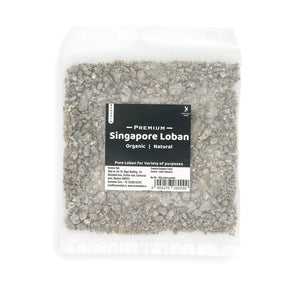
- Loban (Benzoin resin): A pale, slightly sticky resin with a sweet, warm, vanilla-like base note. Loban is the one most households keep on hand for everyday use — a pinch during the evening aarti, at the start of a pooja, or simply to clear the air in a room after a meal. Our Pure Singapore Loban is sold as clean, unmixed resin for exactly this kind of daily use.
- Gugal (Guggul): A harder, darker gum resin with an earthier, almost smoky-balsamic smell. Gugal is the resin most associated with havan and yagna, where its heavier aroma is thought to carry further and sit longer in the air. It's a common base note in many Ganpati and temple-style dhoop blends, and our Pure Gugal Dhoop keeps it in its unblended, traditional form.
- Black Mora: A rarer, deep-coloured resin with a heavier, more resinous profile than loban or gugal. It's less common in everyday households and more often reached for by people who already know resin dhoop well and want something stronger for meditation spaces or longer sittings.
- Sambrani: Not a separate tree resin so much as a format — sambrani is usually a benzoin-based blend pressed into a small cup, disc, or cylindrical stick that lights directly with a matchstick or lighter, the way a cone does. This is what makes sambrani the easiest entry point into resin dhoop: there's no separate heat source to manage.
Resin, Cup, or Stick: Which Format Should You Use?
If you're used to dhoop sticks or cones, the jump to loose resin can feel like extra effort, so it helps to know where each format actually fits.
A dhoop stick or cone is the easiest for daily use — light it, place it, and it burns through on its own for several minutes. Loose resin, like our Pure Singapore Loban or Pure Gugal Dhoop, asks for a little more attention because it needs a heat source, but in exchange it gives you control: you decide exactly how much to use, and a small tin can scent several ceremonies over many months because only a pinch is needed each time. Sambrani cups sit in between — they self-ignite like a cone, but burn with the deeper, rounder character of a resin rather than a stick. Our Exotic 4 Sambrani Cup Dhoop is a good way to try that format without committing to loose resin at all.
How to Burn Loose Resin Without Reaching for Charcoal
The traditional method for loban, gugal, and black mora is to place a small piece on a hot charcoal disc, which many households still do, especially for havan. But if you'd rather skip the charcoal altogether, there are a few simple alternatives that work well at home:
- Use an already-burning ember: Light a dhoop cone or a sambrani cup as you normally would, let it build a small glowing ember, and sprinkle a few grains of resin directly onto that ember. The resin will melt and release its fragrance using the heat that's already there, with no separate charcoal needed.
- Use an electric resin or oil burner: A small electric dhoop or oil burner heats a metal or ceramic plate from below. Place a few resin grains on the plate once it's warm, and it will release fragrance gently for as long as the burner stays on — no open flame or smoke-heavy charcoal involved.
- Choose a self-igniting format instead: If managing a heat source isn't something you want to deal with daily, a sambrani cup or a jumbo sambrani stick is the simplest workaround, since it's designed to light directly and burn on its own, much like a dhoop cone.
Whichever method you use, resin dhoop is best burned in a well-ventilated room, on a heatproof plate or holder, and kept well away from curtains, bedding, or anything flammable.
Matching the Resin to the Moment
Once you know the basic character of each resin, choosing between them gets much simpler. Loban's lighter, sweeter profile suits quick, frequent use — the evening aarti, a quiet five minutes after work, or simply freshening up the puja corner before guests arrive. Gugal's deeper, heavier smoke is traditionally reserved for more deliberate moments: havan, Ganpati or Navratri pooja, or any ritual where a longer-lasting, more grounding aroma feels appropriate. Sambrani cups are the practical middle ground for households that want the resin experience without the extra steps, which is why they're such a common sight during daily pooja across South Indian and Maharashtrian homes in particular.
None of this is about one resin being "better" than another — it's closer to choosing between a light evening fragrance and a richer one for a special occasion. Keep a small tin of loban for daily use, a pack of gugal dhoop for when the occasion calls for something deeper, and a box of sambrani cups on hand for whenever you want resin dhoop without any fuss. Used this way, the three together cover almost every situation a stick or cone alone might not.
Shop the essentials